
The control plane for workforce AI
Say yes to AI at work.Keep the rules, the spend and the record.
SynapBridge is where policy, spend and evidence meet for the AI your people already use. People pick the best model for each job and keep their context. Security sets the rules once. Finance sees every governed dollar, by team, before the invoice.

 GPTOpenAI
 BedrockAWS
 ClaudeAnthropic
 Azure OpenAIMicrosoft
 GeminiGoogle
 Llama and moreMeta, open models
What is SynapBridge?
SynapBridge is the control plane for workforce AI. It checks, counts and records each request your people send to the AI providers you connect, so policy, spend and evidence come from the same place.
Works with the providers you already pay for
See every provider and its status →OpenAIAnthropicGoogle GeminiAWS Bedrock xAI Grok
 DeepSeek
 Qwen
 Perplexity
 Groq
 Together AI
 Fireworks
 Cerebras
 NVIDIA NIM
 Databricks
 OpenRouterAzure OpenAI PreviewAny OpenAI-compatible API
 Self-hosted models
Provider names and logos belong to their owners and identify compatibility only. You connect each with your own key, so your contracts and discounts stay yours.
The problem
AI is already in most teams. Control often is not.
People adopted AI faster than any policy, budget or review process could follow. The result is four gaps that most organizations will recognize, and each one lands on a different executive.
01
Shadow AI
Employees paste work into whichever tool is open. Security cannot see which models touch which data, so it cannot set a rule.
Lands on the CISO
02
Spend with no owner
Seats, API keys and usage bills arrive from many vendors in many formats. Nobody can say what AI costs by team.
Lands on the CFO
03
Agents and tool servers
Agents now call tools that read and write company systems. Each new MCP server is a new door that needs an owner and a review.
Lands on the CIO
04
Evidence after the fact
Policies sit in documents. When a board member or an auditor asks what happened, the answer is a scramble through logs.
Lands on the AI and risk lead
Why now
The rules are getting dates, and the tools are getting hands.
- Regulation has a timeline. Parts of the EU AI Act already apply and the rest phase in. Confirm current dates for your use cases with your counsel.
- Agents act, not just answer. A chat risk becomes an operations risk.
- Buyers want evidence. Security reviews now ask for decision records, not policy PDFs.
One pane of glass
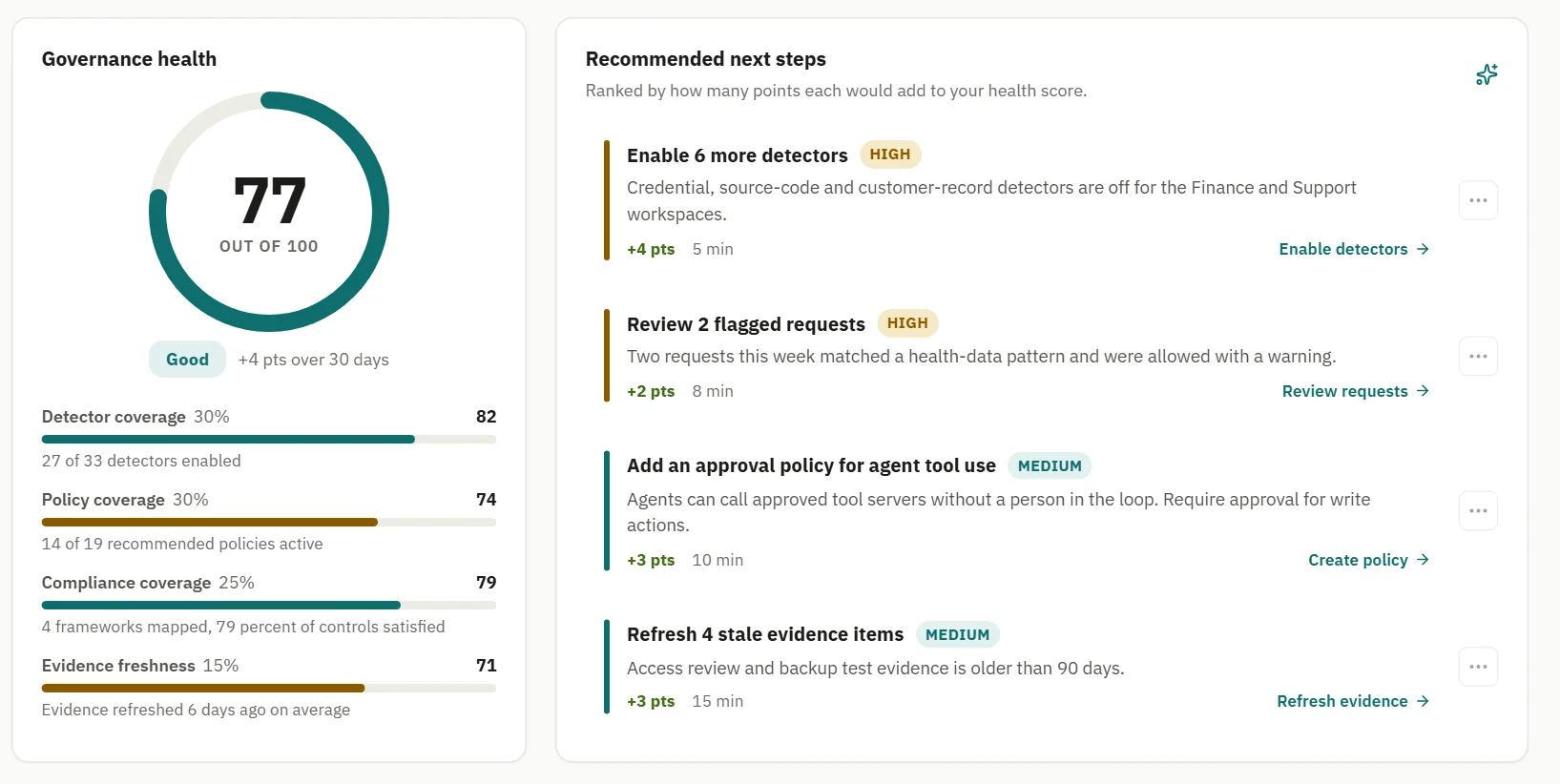
See AI governance as one score, with the next step ranked.
Policy, approvals, spend thresholds, model routing, evidence and agent controls share one view. The score and every number come from the workspace's own settings and activity.
- A health score across four weighted pillars
- Next steps ranked by the points each would add
- One left rail for threat surface, audit trail, approvals, policies and spend
Product walkthroughs
Watch three real workflows, start to finish.
Recorded in the product on a fictional tenant with sample data. Captioned and silent, so they play anywhere, including in a meeting.
Read the transcript
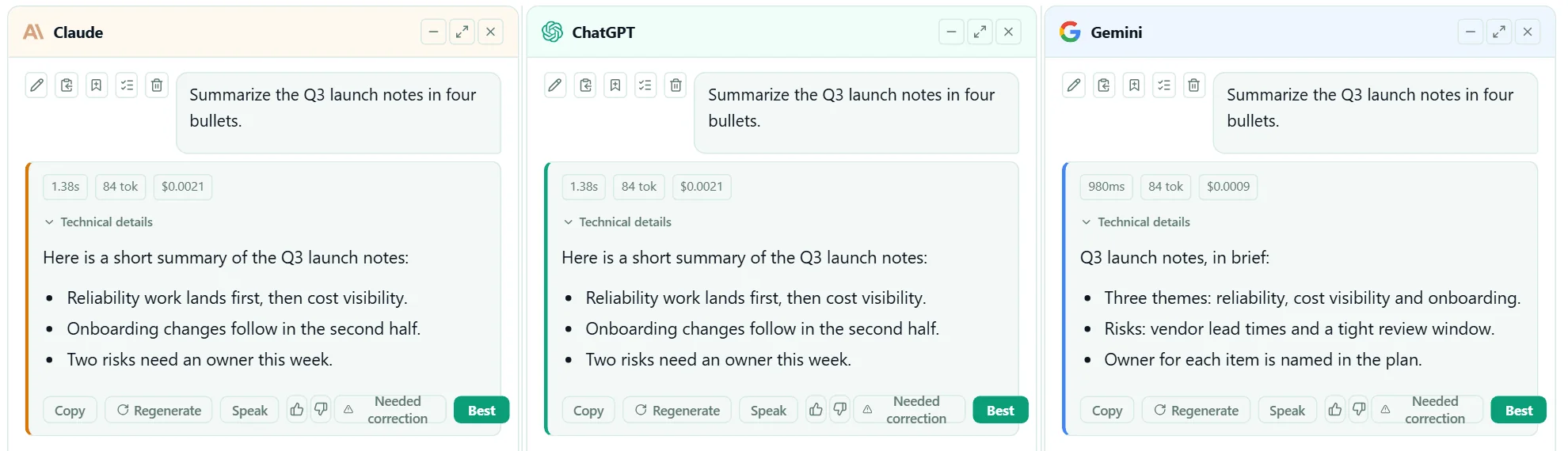
- Compare: one prompt, several models, one view. Every answer shows its latency and cost.
- Control: every governed request is checked against the active policy. One score, with next steps ranked by the points each adds.
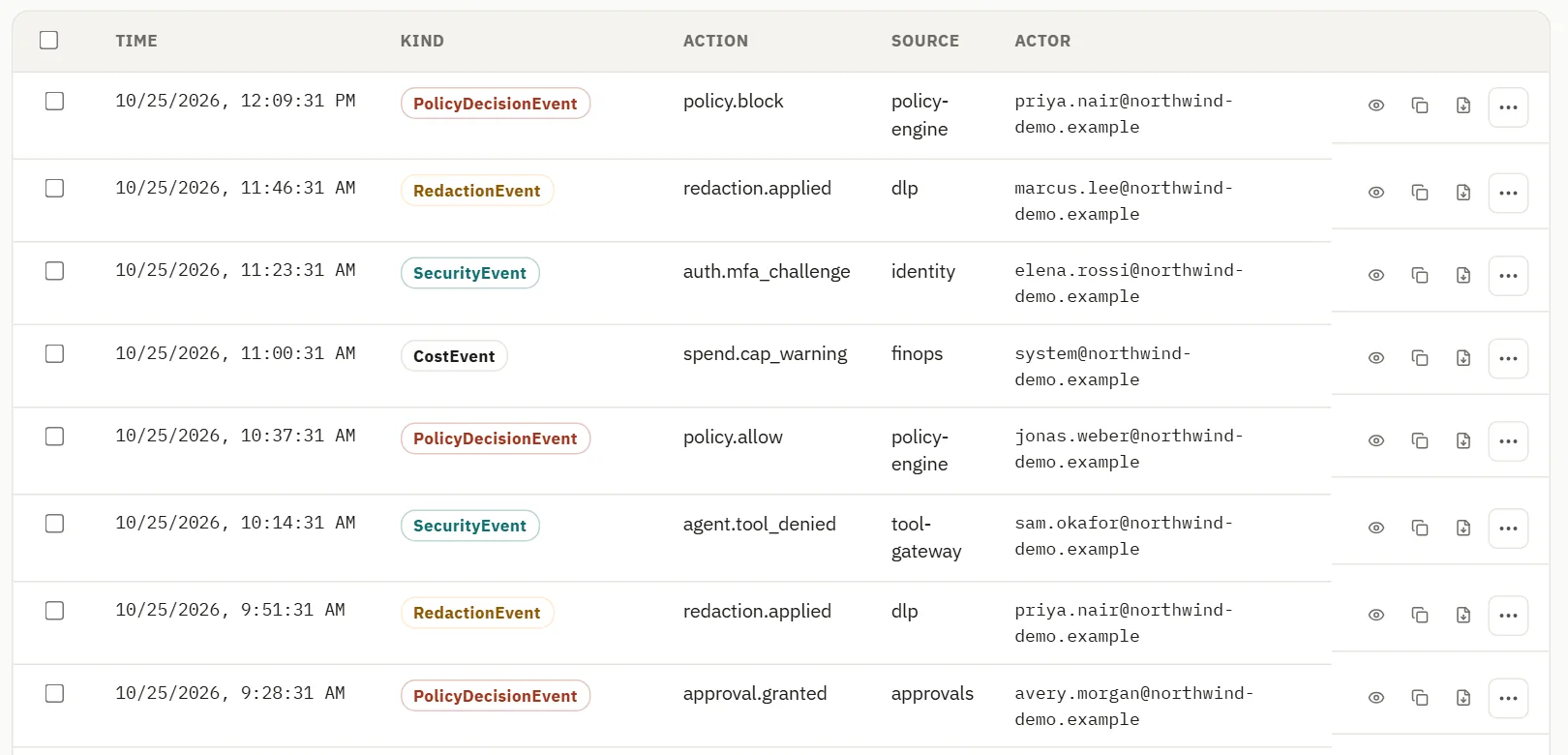
- Evidence: each decision is written down with the policy version.
Read the transcript
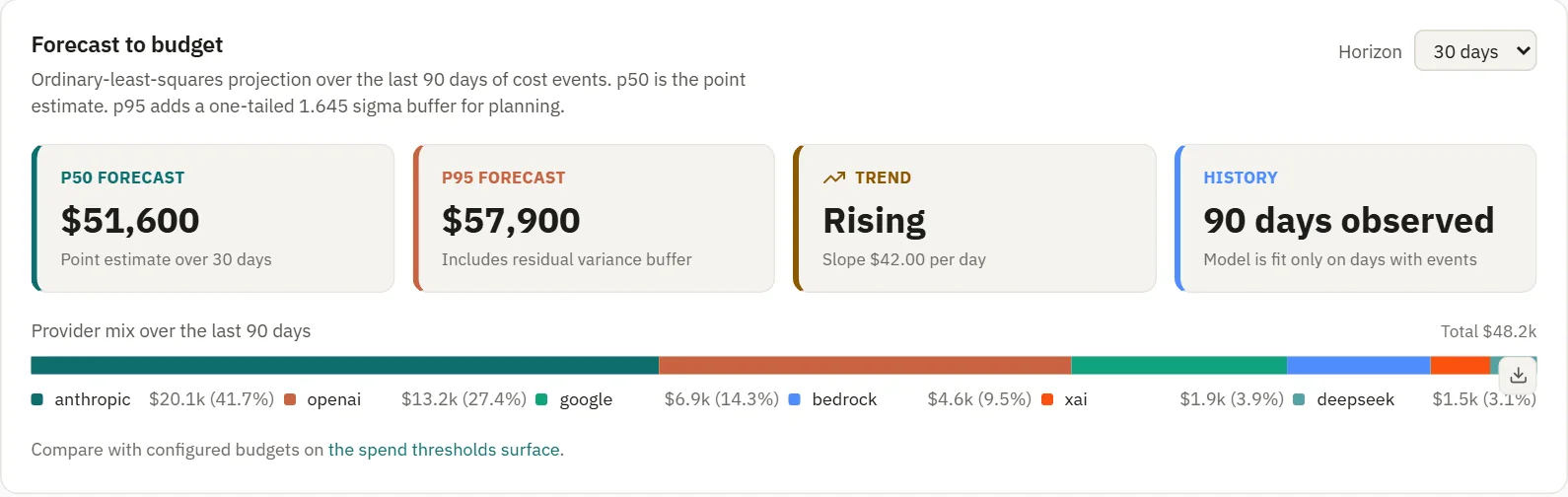
- One ledger: spend by team and model, with a ledger code on every row. Switch the view by user, team or project.
- Forecast: see where the month ends up, with a planning upper estimate.
- Alerts: caps and alerts warn the owner early. They are checks, not guarantees.
Read the transcript
- Registry: every tool server on one list, with a decision on file. Classification rules decide which servers may be used at all.
- Approve: named reviewers approve, deny or reassign from one queue.
- Ledger: each agent run is recorded with its policy and outcome. Agents and MCP are in Beta.
Governance that operates
Not a checklist nobody runs. A loop that runs on the request.
Set the rules, check each request against them, route exceptions to a named approver, keep the record, and review what happened. Pick a situation to see the decision path.
- 1Set the rules
- 2Check the request
- 3Decide
- 4Route exceptions
- 5Record
- 6Review
Pick a situation on the left. The path on the right shows what runs on the request, in order, and what is written down.
Governance
A claims analyst pastes patient details into a model not approved for health data.
- Request
Request received
User on the Claims team, model GPT, through SynapBridge.
- Check
Sensitive-data pre-check
A health-information pattern matched in the prompt.
- Policy
Policy v14: health data stays on approved models
This model is not on the approved list for this data class. Decision: block.
- Outcome
Stopped before the model is called
When the sensitive-data check recognizes the content, the user sees the reason and the approved alternatives. Detection is pattern-based.
- Record
Decision record written
Policy version, rule, data class and outcome are stored and can stream to your SIEM.
Detection is pattern-based and covers known patterns. Rules apply to requests made through SynapBridge.
AI FinOps
Customer Support reaches 95 percent of its monthly budget.
- Request
Request received
User on Customer Support, model Claude.
- Check
Cap check
Team spend is at 95 percent of the monthly limit.
- Policy
Soft limit crossed
The request is allowed with a warning. If the cap is set to block on breach, the same check stops the request.
- Alert
Owner alerted
The budget owner and finance see the forecast crossing the cap before month end.
- Record
Cost attributed
The cost is recorded against the team and its general ledger code.
Amounts are examples. Limits and who is alerted are set per workspace.
Agents and MCP (beta)
An agent tries to call a public web fetch server nobody has reviewed.
- Request
Tool call requested
Agent asks to use the tool server named Public web fetch.
- Check
Registry lookup
Server is discovered, not approved. Classification: external. Risk: high.
- Policy
Classification enforcement
External servers are on the blocked list for this workspace. The request is denied by policy and the decision is recorded.
- Outcome
Review opened
An approval request goes to the named reviewer with the scan results attached.
- Record
Run record written
The agent run shows the denial, the reason and the policy in force.
Tool-server governance is in beta. Enforcement applies to calls made through SynapBridge.
The everyday case
A marketer drafts a product update with an approved model.
- Request
Request received
User on Marketing, an approved model.
- Check
All checks pass
No sensitive pattern, model entitled, team under cap.
- Outcome
Allowed
The answer arrives with no added steps for the user.
- Record
Attributed and recorded
Cost goes to Marketing. The audit trail has the decision. Nobody had to do anything.
Most requests look like this one. The controls matter most in the moments above.
An illustration of the decision path, not live data. Detection covers known patterns.
What each team gets
A workspace people want to use, with controls they do not have to think about.
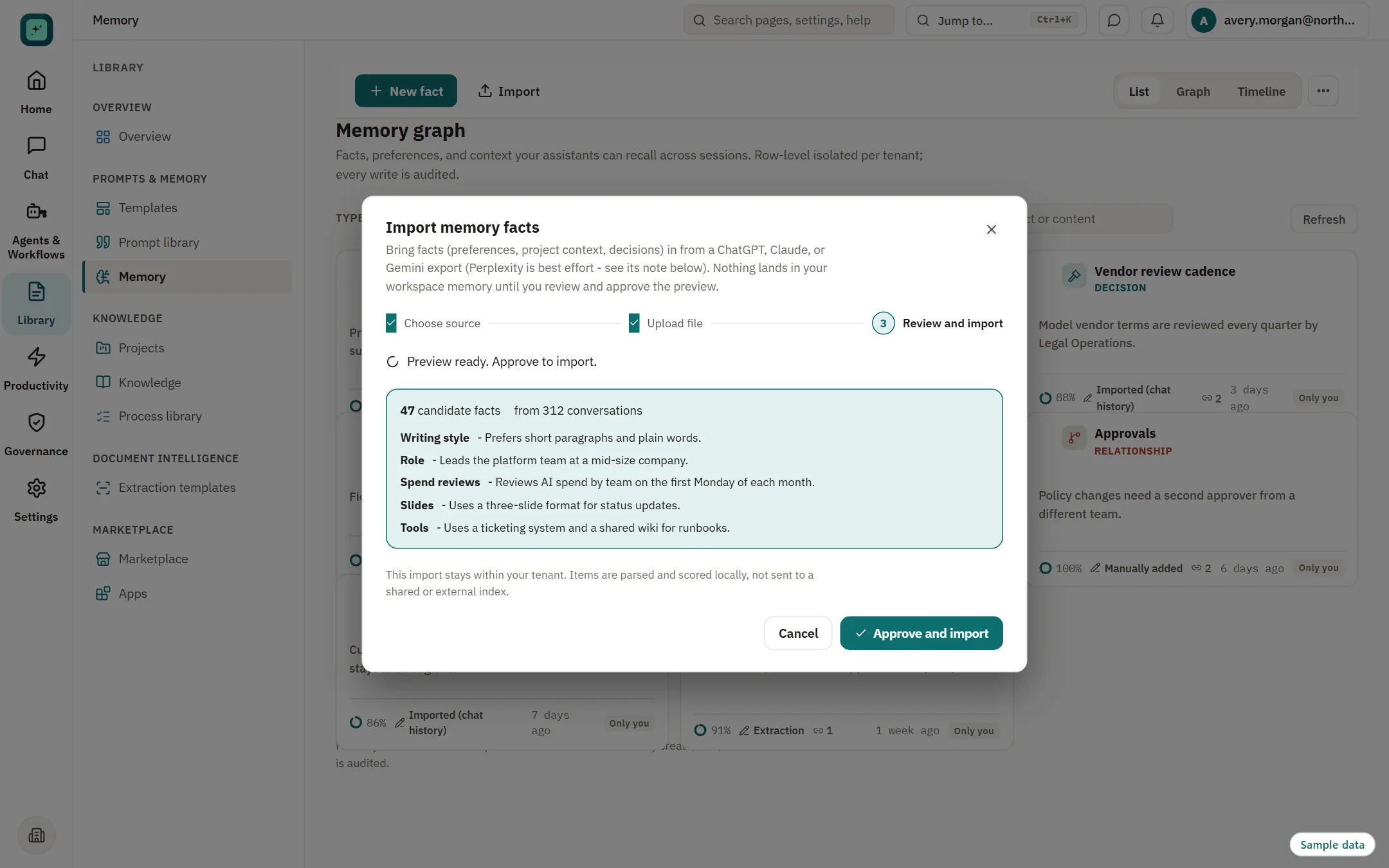
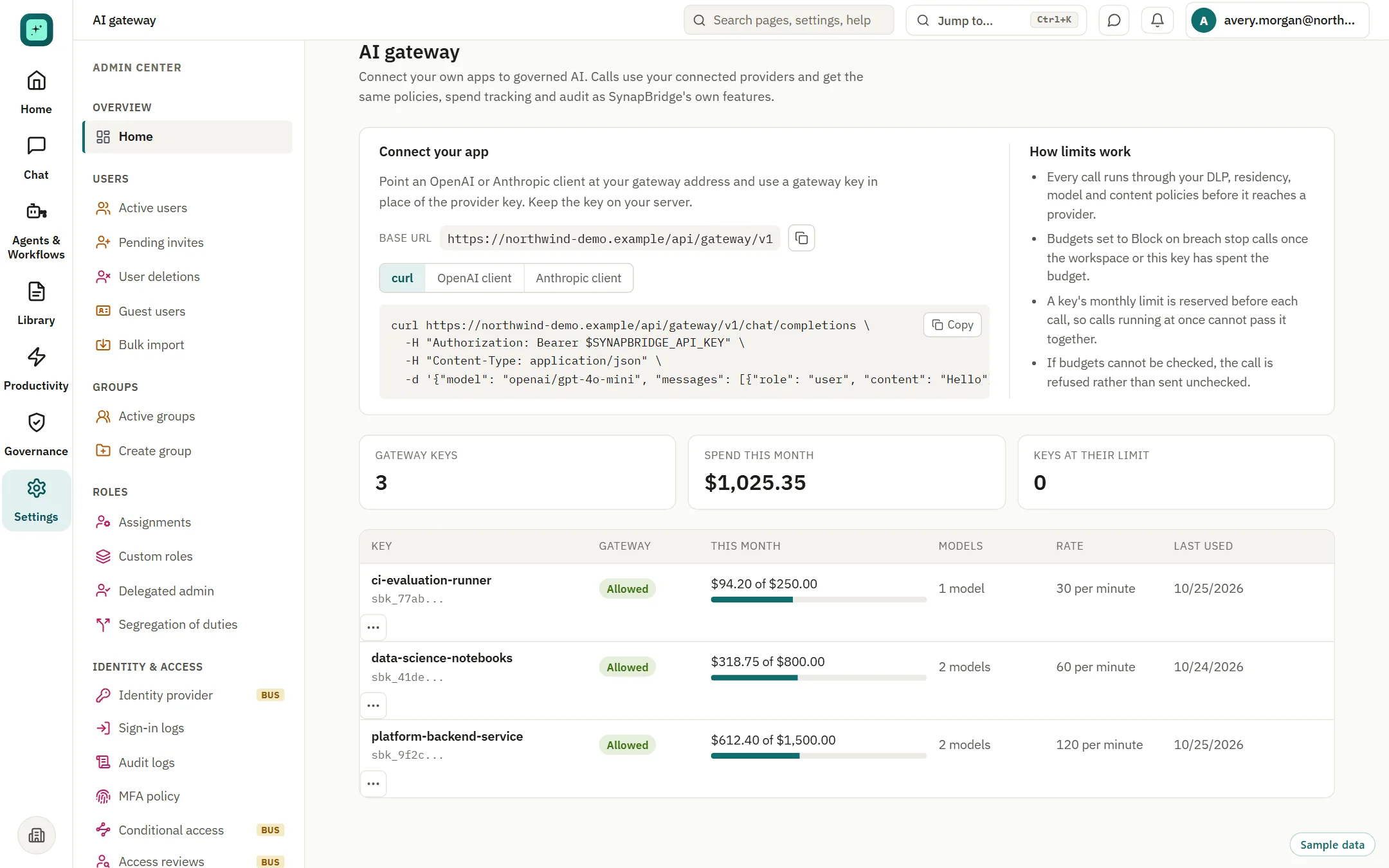
Two questions teams ask next
What happens to our context, and what about our developers?
Honest by design
What is verified, what is under way, and what is only planned.
We show the real status of every claim. No badge stands in for a report, and no third-party attestation has been issued yet.
Verified today
- Data processing agreement published
- One published sub-processor register
- Open trust center, no login and no form
Architected to align
- HIPAA Security Rule safeguards, mapped and published
- GDPR processor obligations, covered in the agreement
Under way and planned
- Architected to align with the SOC 2 Trust Services Criteria
- ISO/IEC 27001, declared intent
- HIPAA BAA program, annual penetration test and disaster recovery test, planned
Start where you are
Look first, assess, or pilot.
Take the product tour
Six steps through real screens, in about five minutes.
Start the tour →
Run the gap check
Ten questions that find where a control may be missing, with a memo to share.
Check your gaps →
Start from your role
Finance, security, IT and AI leads, each with the questions to ask in a demo.
Find your role →
Pilot it
A small pilot with your providers and one team, plus a ten-question buyer's guide.
Plan a pilot →
Say yes to AI. Keep the rules, the record and the bill.
Book a walkthrough with the people who built it, or start a trial and look around yourself.